
Sayings

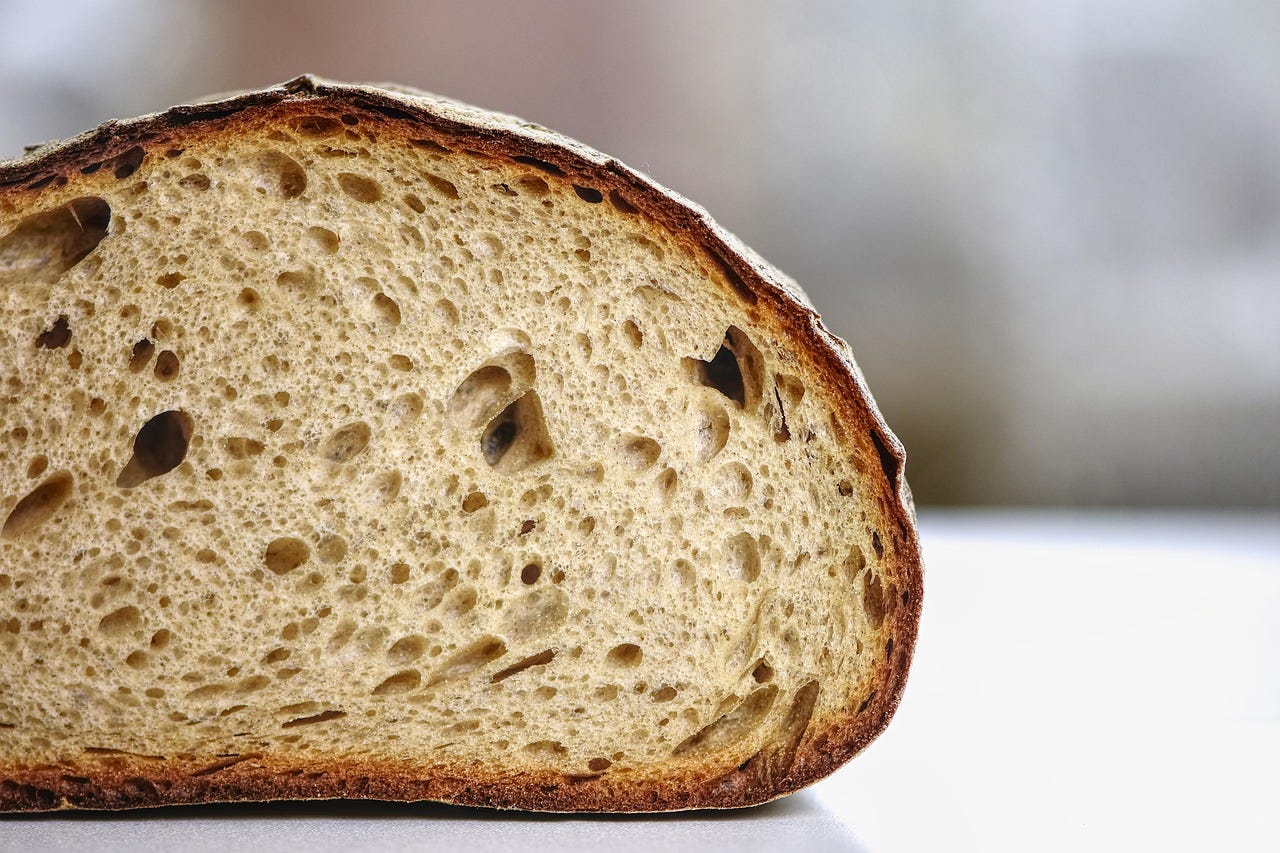
Things that my grandmother used to say just pop up in my mind when I least expect to hear her voice. As I was placing a slice of sourdough bread into the toaster, my baba was talking to me in my thoughts: ‘If you have bread in the house, you have everything.’ Mentally I register this and with a smile I silently utter - Thank you, baba, for your wise guidance over all these years, thank you. When peeling a pineapple with a sharp stainless-steel knife, baba’s voice is guiding me on how to use the knife properly ‘away from you, not towards you’. As a quick flick of the wrist is corrected after the pasta has been cooked and water must be drained - baba’s guidance saying ‘Ne preko ruke’ (do not twist the wrist). It could be that it was the repetition of these expressions that stuck with me, or whether it is a common cultural wisdom, I am not sure which one of these. Perhaps something else altogether bestowed baba’s wise words living inside of my head and contributing to my self-talk, often overriding my other thoughts. The things that we say to ourselves are not obviously our own but a result of a collection of gathered sayings.
During the war era, there were several sayings that I heard my grandma mention, although I think she gathered these from the wise village folk herself: ‘If chimneys on burnt down houses are still standing, the family will return to its hearth’. In my own experience this has turned out to be true - in my own village - on those properties where chimneys remained standing, the family has returned and rebuilt the ruin. My family house burnt to the ground, sometime after the family was killed inside - so obviously no-one will ever live there. Baba used to say that there was one old man who lived between the wars and he used to say: ‘There will come a time when all villagers are going to fit under the open umbrella’ and people used to laugh at him. At that time, each family had 2-5 children with several generations living together, and only a few households were empty nesters where the younger generation moved to town or overseas. People would help each other dry hay, slaughter pigs, pick grapes and gather corn. They went dancing on Saturday nights and at funerals, a large procession of people on foot from the village would attend the final farewell to the departed. It was unimaginable to even grasp that the village population would come down to only 2 or 3 people. The old man would reply to them: ‘You can laugh as much as you like, but this is what I see, and you and I won’t be alive then to witness this, but our children will’. And his words after all turned out to be prophetic.
There are other common expressions in Croatian often used in communication within my family and friends, such as:
Gvožđe se kuje dok je vruće - you strike iron while it is hot (meaning: you take opportunity while it is there)
Možeš to mačku okačiti o rep - you can put it on cat’s tail (meaning: that is something that makes lots of noise, but useless otherwise)
Mi o vuku, a vuk na vrata - As we’ve been talking about a wolf, and the wolf is knocking on the door (meaning: someone suddenly appears as if evoked)
or my mum’s favourite: ‘Spasti sa konja na magarca’ - To fall from the horse onto a donkey (meaning: things taking a turn for worse)
Upala mu sjekira u med - His axe fell into a honeypot (meaning: he found himself in an easy life)
Us humans have the ability to choose our thoughts and attitudes, with mindful praiseworthy well spoken words influencing decisions made. Know that we have the power to heal, encourage and uplift. You can never be sure who may remember your words when you are unable to recall them regardless of how insignificant the past encounter may appear to you. Young children especially remember lessons learnt, kindness and advice surrounding them in their environment. Be mindful of the message you are conveying to the people that come after you. They will remember, both, the great and the not-so-good. It is your duty to ensure that they bring up your name with gratitude for the day when you won’t be around to bask in the glory of those words.
As it is written in the scriptures: “By your words you’ll be condemned and by your words you’ll be justified’, it is a powerful reminder that words have energy, and they continue to live beyond our own physical existence. My grandmother’s words, as remnants of her personal energy, are alive through my intonation carrying her vibrancy to influence my daughters with this legacy.
What moved me most in your piece is how clearly you show that words spoken in love — especially in hardship — do not disappear. They become part of how we think, how we move, how we care for ourselves without even realizing it. Your grandmother is not just remembered… she is still guiding you in the ordinary rhythms of life. That felt deeply true to me.
The idea that our inner voice is really a gathering of voices we have loved and trusted is powerful. It made me think about how wisdom is not only taught — it is absorbed, repeated, embodied, and eventually lived. The smallest phrases, spoken over years, quietly become structure inside us.
Your reflection on sayings formed in times of scarcity and war especially stayed with me. Those words were not just expressions… they were survival. They carried perspective, restraint, gratitude, and practical care when life was uncertain. I understand that deeply. Words spoken to me in difficult seasons have been life savers — steadying, guiding, protecting — long after the moment they were first spoken.
I also love how you show language as legacy. Not just memory, but continuity. Your grandmother’s voice lives in your tone, your habits, your daughters’ lives. That is such a beautiful way to understand inheritance — not only what we receive, but what continues through us.
Thank you for writing something that honors how speech, love, culture, and survival are all woven together. It made me reflect on the voices that live inside me too… and feel grateful for them.